The Sparkle Dust Scam | What Every Commercial Building Owner Needs to Know
How a cheap aluminum coating gets sold as a 20-year roofing system, and why nothing will stick to your roof once it’s up there.

🔲 The “Sparkle Dust” System Is a Cosmetic Cover-Up. Cheap asphalt mastic, thin fabric, and a reflective aluminum topcoat are sold as a “roofing system,” but they’re typically just maintenance coatings dressed up as a full solution.
🔲 It Fails, And Makes Future Repairs More Expensive. The aluminum layer prevents proper adhesion of future coatings, trapping moisture and forcing costly tear-offs or overlays when the system inevitably fails.
🔲 The Profit Margin Drives the Scam. Materials and labor may cost $5,000 to $7,000, while building owners pay $12,000 to $18,000 or more, for a one-day job that doesn’t address underlying damage.
🔲 Protect Yourself With Due Diligence. Be wary of cold calls, one-day installs, contractor-only warranties, and dramatically low bids. Always demand documentation, manufacturer-backed warranties, and a full roof assessment before signing.
If you own a commercial building with a flat or metal roof, there’s a good chance you’ve gotten the call. Maybe a dozen times. Maybe more. A friendly voice promises to fix your roof for a fraction of what other contractors quoted. They’ll send a crew out, get it done in a day, and warranty it for 20 years.
It sounds like a dream. For the contractor, it is. For you, it’s the beginning of a nightmare that could cost you twice what a proper roof replacement would have.
This article breaks down exactly how this scam works, what the materials actually are, and what you can do if you’ve already been affected.
How the Sparkle Dust Scam Works
The process is designed to look impressive while using the cheapest possible materials and the least amount of labor. Here’s the typical sequence,
Step 1: The Base Coat. A modified asphalt mastic, essentially a liquid tar product, is sprayed onto your existing roof surface. This is a cold-process application, meaning no heat is used. The mastic itself is a commodity product available at any roofing supply house for roughly $25 to 40 per 5-gallon pail.
Step 2: The Fabric. A polyester fiber membrane is rolled out over the wet mastic. In a properly engineered system, this reinforcing layer would be a heavy-duty polyester or fiberglass fabric with documented tensile and tear strength. In the sparkle dust operation, the fabric is typically the thinnest, cheapest option available, just enough to create the appearance of a multi-layer system.
Step 3: The Topcoat. Another layer of cold-applied asphalt goes over the fabric. This creates the “sandwich” that gets presented to the building owner as a “seamless roofing system.”
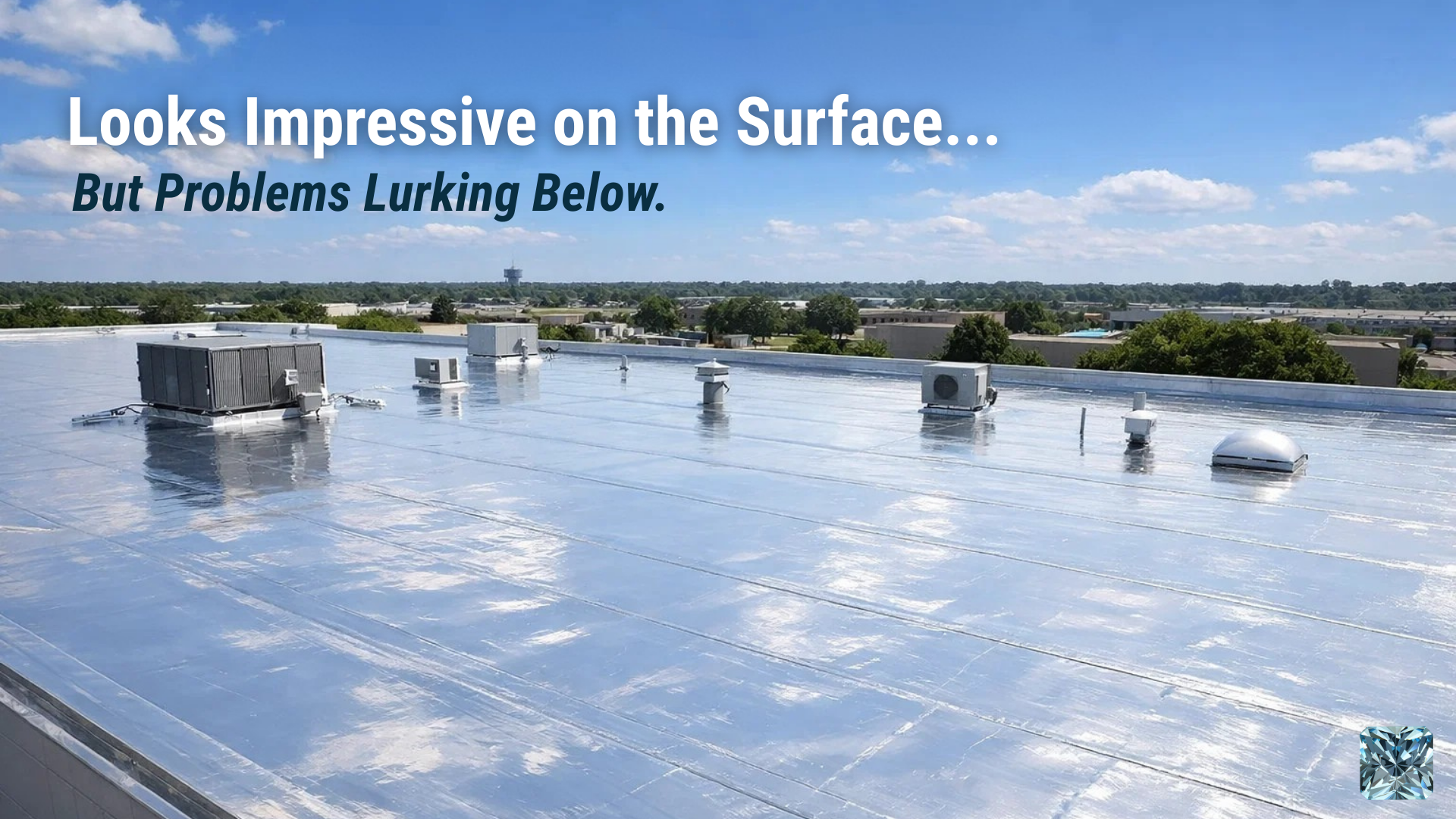
Step 4: The Sparkle. And here’s the hook. A final coat of fibered aluminum roof coating is applied. This is the “sparkle dust”, a silver, reflective topcoat made of asphalt mixed with aluminum flake pigments. It looks dramatic. It shines. It reflects sunlight. The building owner sees a bright silver roof and assumes something substantial has been installed.

The entire process can be completed in a single day on a mid-sized commercial building. And that speed is part of the sales pitch.
Why This System Fails
The fundamental problem isn’t that these materials don’t exist or that they can’t serve a purpose. Fibered aluminum coatings and cold-applied mastics are real products with legitimate applications, primarily as maintenance coatings over existing, structurally sound roof systems. The problem is that they’re being sold as a complete roofing solution when they’re not.
The aluminum coating acts as a sealer. Once that reflective aluminum layer cures, it creates a surface that other materials have extreme difficulty bonding to. Silicone coatings won’t adhere properly. Urethane coatings struggle. Even other asphalt-based products can’t get a reliable grip. This means that when the system inevitably fails, the next contractor faces an enormous challenge: nothing will stick to what’s already up there.
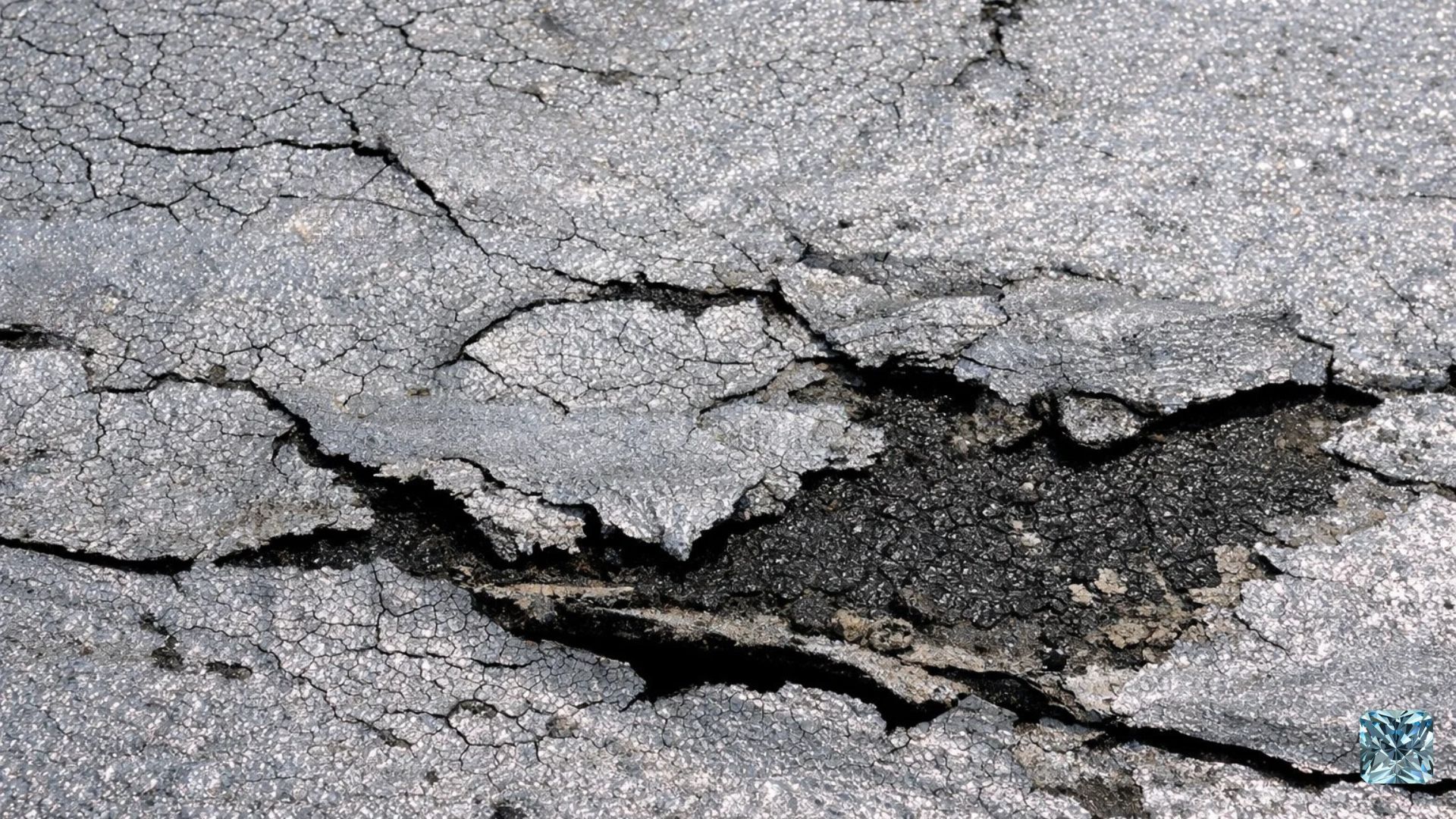
The underlying problems aren’t addressed. Most buildings that receive this treatment already have moisture issues, deteriorated insulation, or compromised roof decking. Spraying a coating over a damaged substrate doesn’t fix the damage, it traps it. Moisture continues to migrate under the new coating, causing mildew, rot, and accelerated deterioration that’s now invisible from the surface.
The material is too thin. Fibered aluminum coatings are typically applied at 1 to 1.5 gallons per 100 square feet. That results in a dry film thickness measured in mils (thousandths of an inch). Compare this to a proper single-ply membrane or multi-layer coating system that provides 45 to 90 mils of protection. The sparkle system is, quite literally, a Band-Aid.
Thermal cycling destroys it. As your roof heats and cools, expanding and contracting with every temperature swing, the thin coating cracks, crazes, and separates. The poly fiber membrane, if it was low quality to begin with, provides inadequate reinforcement. Within months to a few years, water finds its way through.
The Math Behind the Scam

Understanding the economics helps explain why this practice persists. The raw materials for a sparkle dust application on a typical 10,000-square-foot commercial roof might cost between $2,000 and $4,000 at wholesale. Labor for a one-day spray-and-go operation might run another $1,500 to $3,000. Total hard cost: perhaps $5,000 to $7,000.
Building owners typically pay $12,000 to $18,000 for this service. Some pay considerably more. That’s a profit margin of 50% or higher on a single day’s work, compared to the industry standard 8 to 15% net margin that legitimate roofing contractors operate on after accounting for labor, materials, insurance, warranties, and overhead.
By contrast, a proper roof restoration or replacement on the same building might cost $25,000 to $50,000+ depending on the system selected, but it addresses underlying damage, uses engineered materials with documented performance histories, and carries a warranty backed by the material manufacturer, not just the contractor.
The cruelest part of the math: once the sparkle system fails, the building owner now faces a repair bill that’s often higher than a proper roof would have cost in the first place. Because nothing adheres to the aluminum coating, the options are usually: (a) a complete overlay with new insulation over the existing surface, or (b) a full tear-off down to the deck. Either way, the $15,000 they spent is gone, and they’re starting from scratch, but now at $30,000 to $60,000 or more.
Red Flags to Watch For
If a roofing contractor contacts you and any of the following apply, proceed with extreme caution,
Cold-calling or persistent phone solicitation. Reputable commercial roofing contractors build their business through relationships, referrals, and demonstrated work quality. Aggressive telemarketing campaigns are a red flag.
The price is dramatically lower than other bids. If one contractor quotes $15,000 and three others quote $40,000+, ask yourself what’s being left out of the cheap option. The answer is usually: proper materials, proper preparation, and proper protection for your building.
They promise to complete the job in one day. A legitimate commercial roof restoration takes time. Surface preparation, moisture testing, proper material application with adequate cure times between coats, these things can’t be rushed without cutting corners.
No before, during, or after documentation. Professional roofing contractors document every phase of the work with photographs. If a contractor doesn’t offer this, ask why.
The warranty is from the contractor only, not the material manufacturer. Legitimate coating systems come with manufacturer-backed warranties that are independent of the installing contractor. A warranty that exists only on the contractor’s letterhead is only as good as the contractor’s willingness to honor it.
They describe “aluminum chips” or “sparkle” as a key feature. Fibered aluminum roof coatings are maintenance products, not roofing systems. If the aluminum topcoat is being marketed as the primary protective layer, you’re being sold a maintenance coating at roofing system prices.
They don’t address underlying roof conditions. Any contractor who proposes to coat your roof without first assessing the condition of the insulation, deck, and existing membrane is not providing a roofing solution. They’re providing a cosmetic cover-up.
What to Do If You’ve Already Been Affected

First, know that you’re not alone. We hear from building owners across the Midwest every week who are dealing with this exact situation. The shame some people feel about being taken advantage of is understandable, but misplaced. These operations are designed to be convincing. That’s how they stay in business.
Here’s what we recommend,
- Document everything. Take photos of your roof now. Photograph any leaks, bubbling, cracking, or separation. Save every contract, invoice, warranty document, email, and phone record related to the original work.
- Get an independent roof assessment. Contact a local commercial roofing contractor who is certified by a major manufacturer (not the company that installed the coating). Ask for a written condition report including core samples to evaluate the condition of the insulation and substrate beneath the coating.
- File a complaint with the Indiana Attorney General. The Consumer Protection Division investigates complaints against businesses that violate Indiana’s Deceptive Consumer Sales Act. You can file online at in.gov/attorneygeneral or call 1-800-382-5516. The more complaints filed, the stronger the case for enforcement action.
- File a BBB complaint. Even if the company has a high star rating (which should itself raise questions if the company is well-known for complaints), your documented experience creates a public record.
- Report to the FTC. If the company contacted you via unsolicited phone calls, especially if your number is on the Do Not Call Registry, file a complaint at donotcall.gov or call 1-888-382-1222. The FTC has imposed substantial fines on companies violating Do Not Call regulations.
- Share your story. Every building owner who speaks up makes it harder for these operations to continue. Visit roofrecoverycommunity.com to share your experience. Your story might be the one that saves your neighbor from making the same mistake.
What a Legitimate Roof Restoration Looks Like
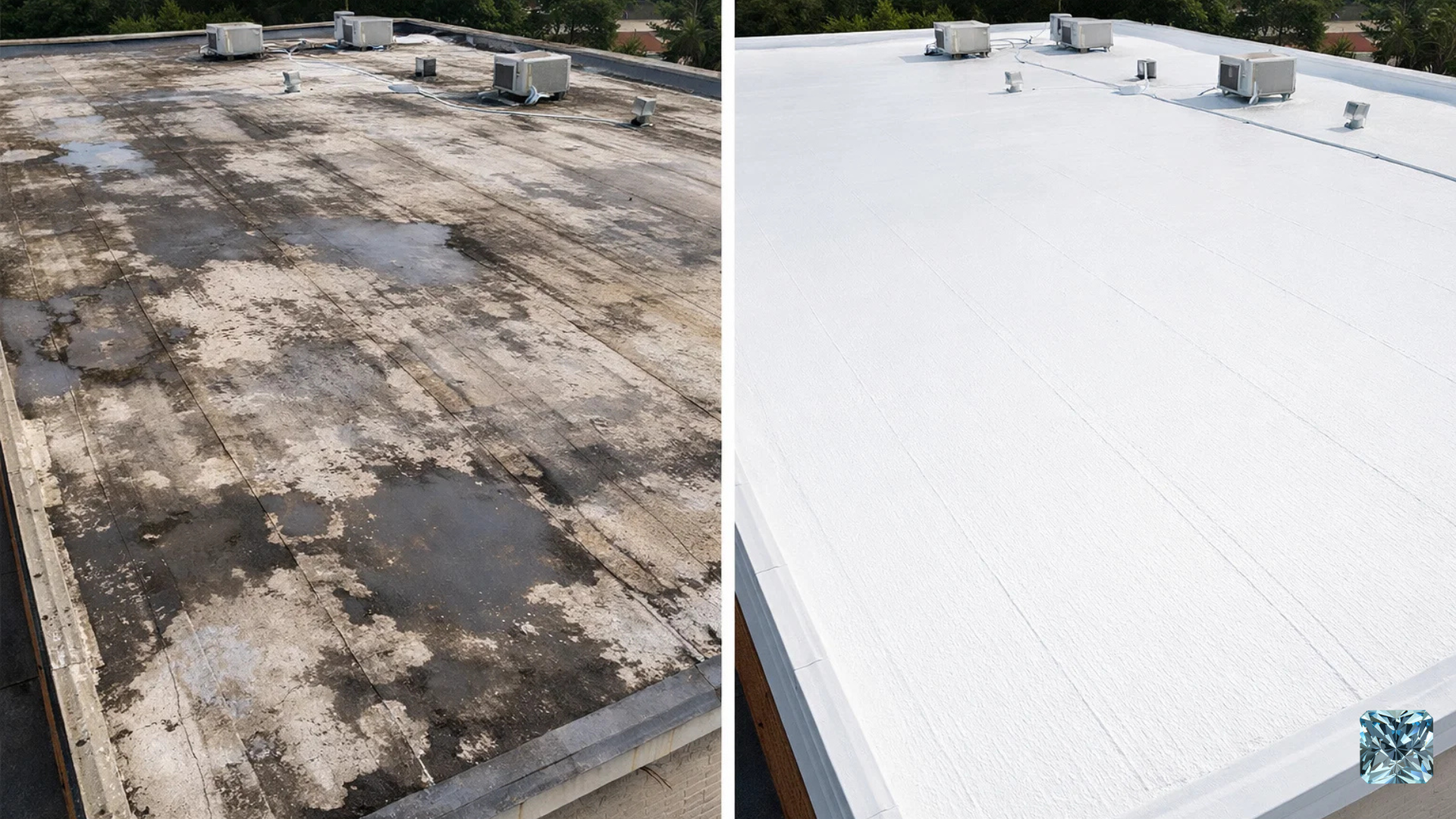
To be clear: there are excellent coating and membrane systems available for commercial flat roofs. Properly engineered and installed, they can extend a roof’s life by 15 to 25+ years at a fraction of the cost of a full replacement. The difference between a legitimate system and a sparkle dust job comes down to a few key factors,
- Thorough pre-installation assessment including moisture scans, core samples, and documentation of existing conditions
- Proper surface preparation, cleaning, priming, and repairing the existing substrate before any coating is applied
- Manufacturer-specified application rates verified by the contractor and documented with photos
- A warranty backed by the material manufacturer, not just the installing contractor
- W-2 employees who are trained, insured, and authorized to work, not transient sub-crews
- Complete photographic documentation of before, during, and after conditions
A real roof restoration takes days, not hours. It costs more upfront. And it actually protects your building.
The Bottom Line
The sparkle dust scam persists because it exploits a knowledge gap. Most commercial building owners aren’t roofing experts, and they shouldn’t have to be. But until the industry cleans itself up, building owners need to be their own first line of defense.
If something sounds too good to be true, it is. If a bright silver coating is all that stands between your business and the next rainstorm, you deserve better.
Ask questions. Get multiple bids. Demand documentation. And if you’ve been burned, speak up. Together, we can protect our community from this predatory practice.